
#186 Running Through the Landscape
From Tokyo's Marathon to the Quiet Rhythm of parkrun—How Running Changes Travel

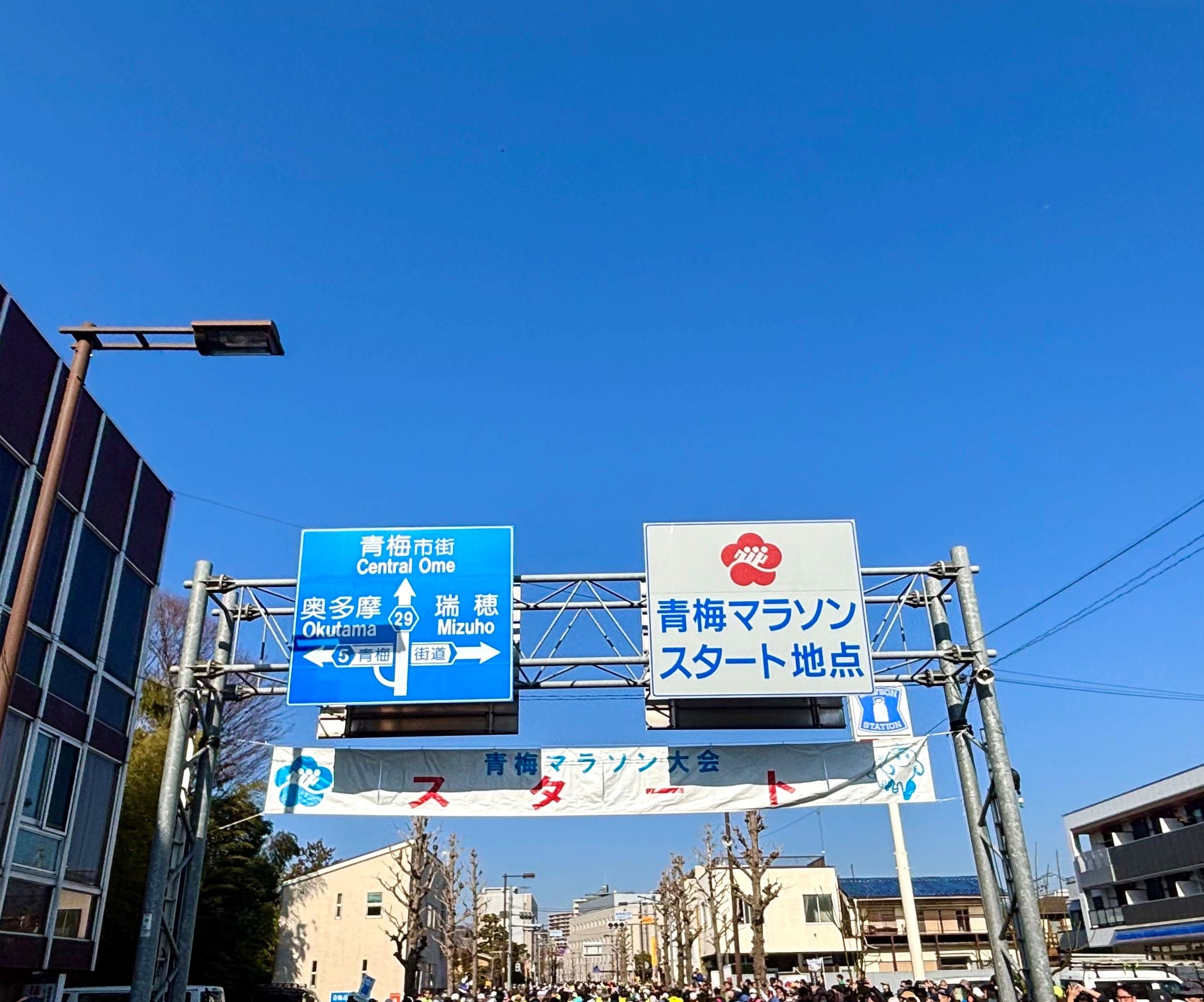
On the train to Ome in Tokyo, the car was full of runners.
We were all headed the same way, and yet it was oddly quiet.
When you step into the start-area crowd, you feel it at once: nerves and a clean, contained kind of excitement.
People along the course seem to hold that mood for you, as if it belongs there every year.
Then the signal.
Whatever was tight loosens.
For a moment, the town becomes something else.
Once a year, Ome changes.
It’s close to the point where running and travel overlap—sometimes it feels like more than an overlap.
It isn’t only about a finish time.
It’s how your body shows up that morning, the days you carried into it, and the question you don’t usually say out loud: why you’re running.
Before the start, that mix sits in the air in a way an ordinary run never quite manages.
This isn’t limited to local races in Japan. When you run while traveling, something similar can happen. You stop being someone who looks at a place and become, briefly, someone moving inside its time.
I want to pin down what running changes in a trip.
Why Race Day Feels Different
Race day is not just a day you run.
A town rearranges itself—just once—for the people on the course.
Once you’re inside that frame, goals appear.
Not only numbers, but things you can’t keep vague: how far your body will go, where your mind will wobble, what you do when it does. On regular runs, you can blur those edges. On race day, you can’t.
What makes it special isn’t whether you ran fast.
It’s that the process is captured only once.
Whatever you’ve been doing—well or badly—shows up in a single morning.
The Ome Marathon
The Ome Marathon is held every year around this time in Tokyo’s western suburbs.
There are two distances—30K and 10K: different lengths, but the same character: one morning a year.
For me, it has become a fixed point on the calendar. The goal shifts a little each time. So does how I prepare, how I pace, how I read my body on the day. When I compare myself to last year, it isn’t only the clock. It’s the state I arrive in, and how I meet the day.
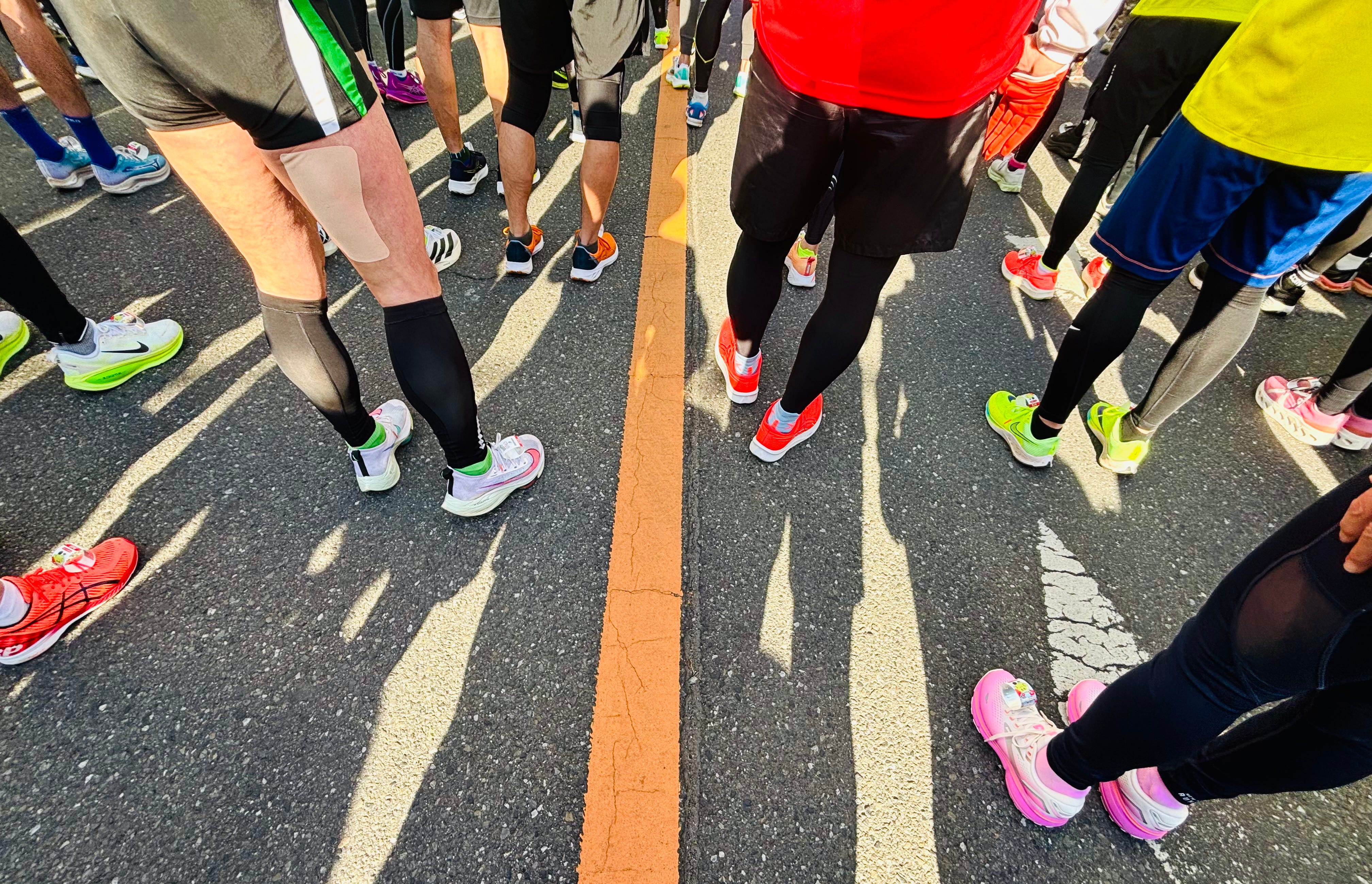
I run through the same town, yet the air is different every year. The kind of cold, the direction of the wind, and the angle of the sun. Even though the cheers reach you.
Those small things end up becoming the memory.
In Ome, there’s a moment when you can tell the season has moved.
You feel it rather than see it. Today, the town felt as if it had jumped ahead by months, as though last week’s heavy snow had never happened. My left knee wasn’t quite right, and I stood on the line with that quiet uncertainty you try not to name.
Not the Same As A Hotel-area Jog
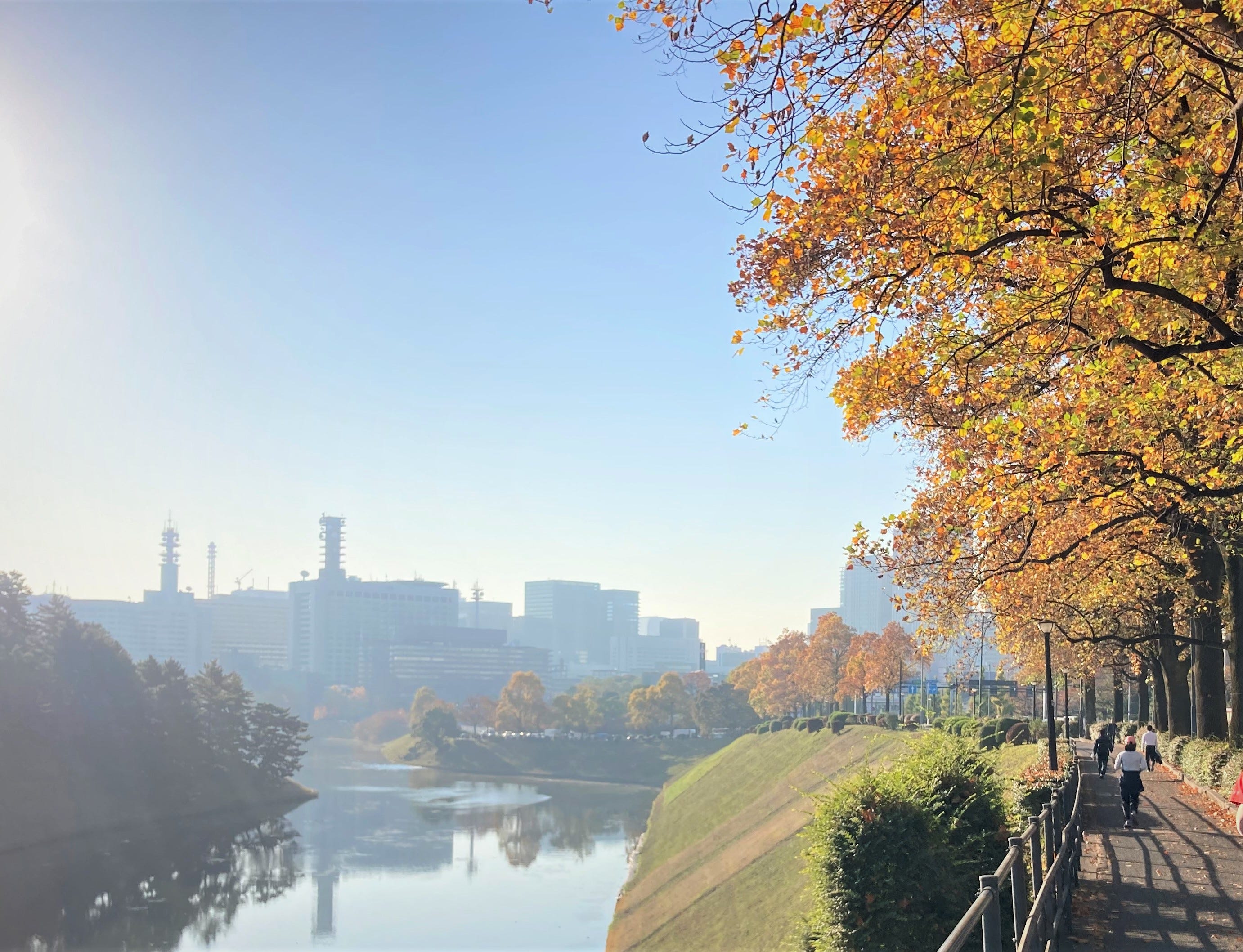
A morning jog around your hotel has its own pleasure.
You run at your own pace, stop where you want, and change the distance on a whim. When you’re traveling, that can be enough.
But race day is a different kind of running.
You’re not moving on your own terms. You match the start time, make the trip, line up, and wait. For a few hours, your body follows the town’s schedule.
Even the days before it bend a little. Sleep, meals, travel, reading the weather—small adjustments that add up. My knee was part of that calculation, too.
It’s “no mistakes allowed.” It’s simply that the morning is singular: you don’t get a second take.
Once you’re moving, a lot of noise drops away. What remains is breathing, and a kind of stillness that doesn’t show up on a casual run near a hotel.
The Middle Ground of parkrun
There is another form of running while traveling: parkrun.
I’ve joined twice abroad—once in Cape Town and once in Melbourne.
In Cape Town, it happened to be my 50th milestone. Nothing was staged.
Still, there was a light, matter-of-fact warmth—people noticing someone’s weeks adding up.
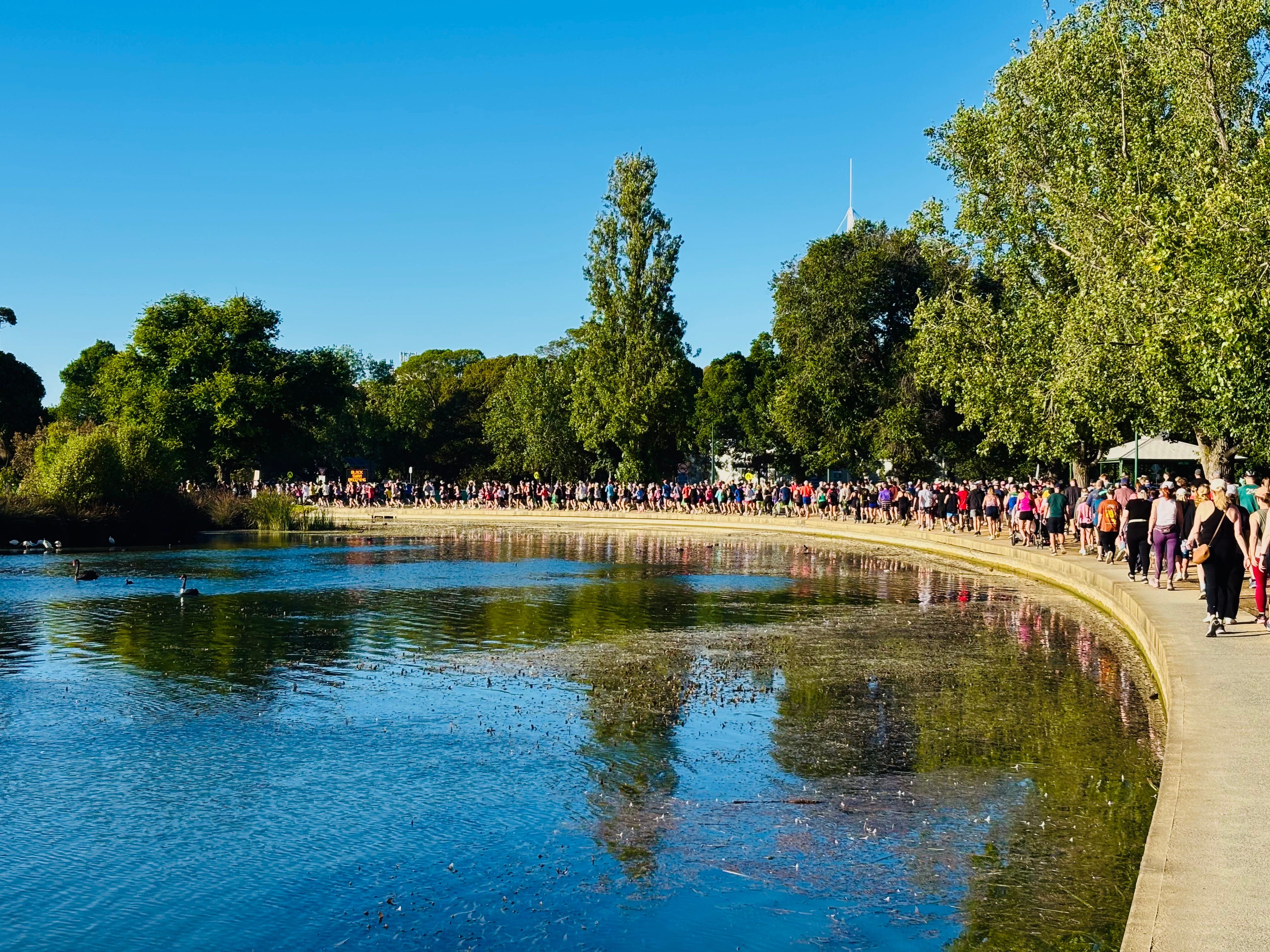
What’s striking about parkrun is how little language it needs.
People gather. They run. They finish and drift away.
A few simple habits do the work. Even as a visitor, you don’t feel like you’re intruding.
And it’s always Saturday at 8:00 a.m., wherever you are.
Travel plans wobble, but this one point stays fixed.
Because the pattern doesn’t change, your body doesn’t have to negotiate the morning from scratch, even when the place is new.
The record stays, too, and it matters more than you’d expect.
Not as a photo, but as a plain line in a log—enough to bring back the texture of that morning later.
Not as big as a major race, and not as solitary as a hotel jog, parkrun sits between them. It makes the boundary between travel and everyday life easier to step over.
The Tokyo Marathon’s excitement turns running into a city-scale event.
At the same time, Ome’s once-a-year morning—and parkrun’s quiet pattern—keep other kinds of connection available.
None of these is “correct.”
But when you put a run inside a trip, the experience shifts. You move from looking at a place to moving inside it, and sometimes that’s enough to change how the day stays with you.
Do you place yourself inside a major spectacle?
Do you blend into a local morning?
Do you join a weekly pattern?
Or is it enough to run quietly around where you’re staying?
How will you bring running into your journey?
____________________________________________________________________
Runner’s Notes (for visitors)
Timing: In many years, Tokyo Marathon follows Ome by about two weeks — this year, Tokyo is March 1.
Pick a format: big-city spectacle (Tokyo), local tradition (Ome), or a weekly pattern (parkrun).
Distance & vibe: Ome offers 10K / 30K and can feel less like a “race weekend,” more like a town’s seasonal turning point.
Travel framing: Treat race day as the anchor; keep the day before/after light.
____________________________________________________________________
A few quiet weekday dates outside Tokyo are beginning to take shape this spring.
You touched the nerve (: Running was my way of exploring the cities - Singapore, Hà Nội, Fukuoka, river banks of Kochi, Osaka and Hiroshima. Absorbing street names, mentally marking places to come later for dinner or a leisurely stroll - it was definitely a “two birds, one stone” activity I miss after resorting to more knee responsible and cardio efficient techniques.
And yes, the high at the end of a marathon, was probably the biggest motivation for that lengthy endeavour with thousands of thoughts digested and discarded on the way.