
#199 Hiroshima Is Changing
The city I remembered as a place of memory now feels like a city quietly in motion.

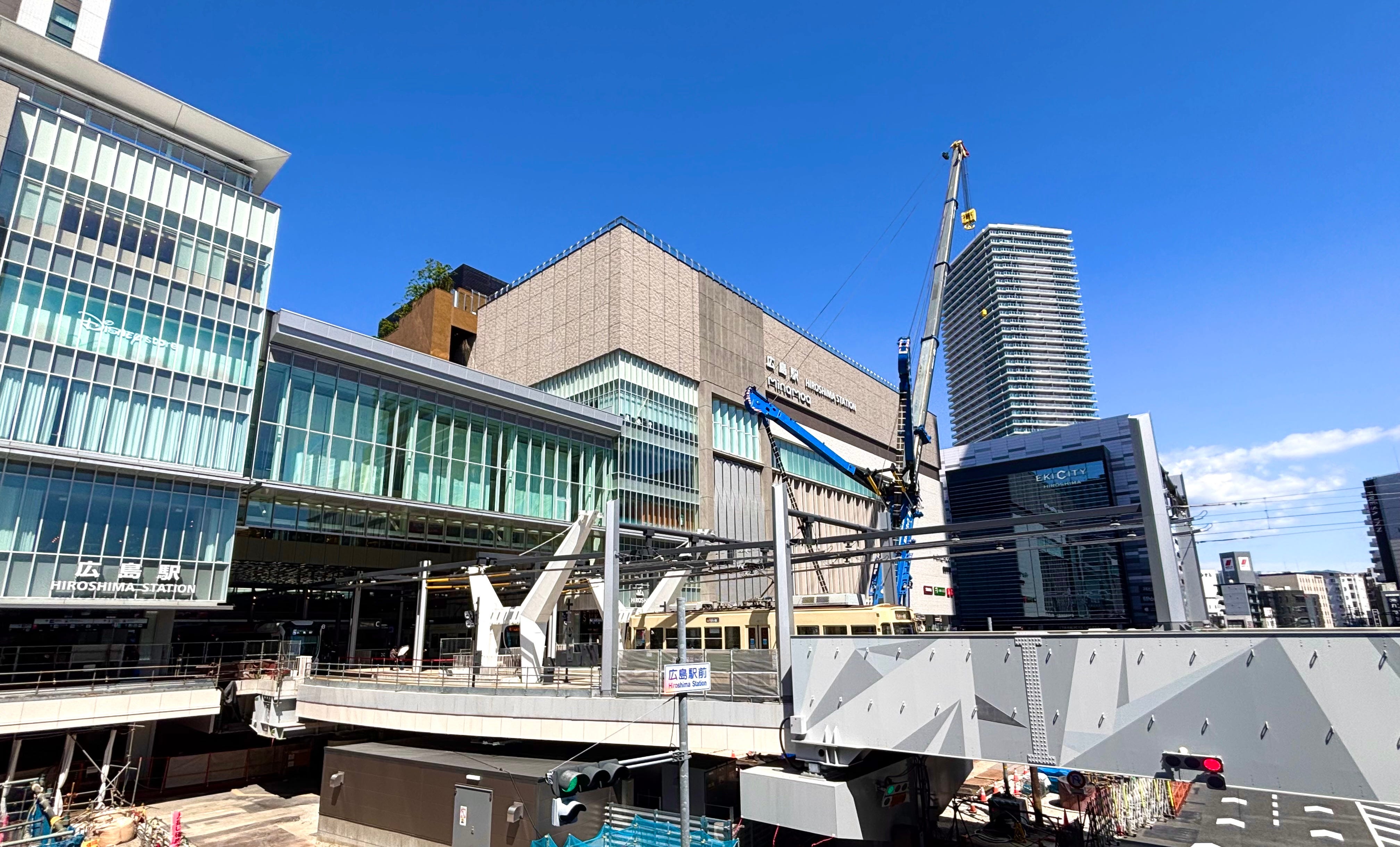
I had always thought of Hiroshima as a city of memory. This time, it felt different.
I was born in Tokyo, but Hiroshima is the first city I truly remember living in. I spent six years of my childhood there, and even now, it remains a place I return to from time to time.
More than half a century has passed since those early years. I have visited Hiroshima many times since, but I cannot remember another visit when I felt the city changing so clearly.
And yet, the change is not dramatic.
The Peace Memorial Park remains as it always has. The Atomic Bomb Dome still anchors the city’s historical weight. Miyajima continues to define Hiroshima’s image for many visitors.
But what stayed with me this time was something else.
Hiroshima felt like a city in quiet transition.
A City Being Reorganized
The first thing I noticed was movement.
Not just people moving through the city, but the way that movement itself seemed to be gradually reshaped.
Around Hiroshima Station, redevelopment is well underway. Station projects are common across Japan, of course. But here, it feels less like a simple upgrade and more like a reconfiguration of how people enter and move through the city. The planned integration of Hiroshima’s streetcars directly into the station building is part of that shift, physically reconnecting the city’s traditional transport system with its main gateway.
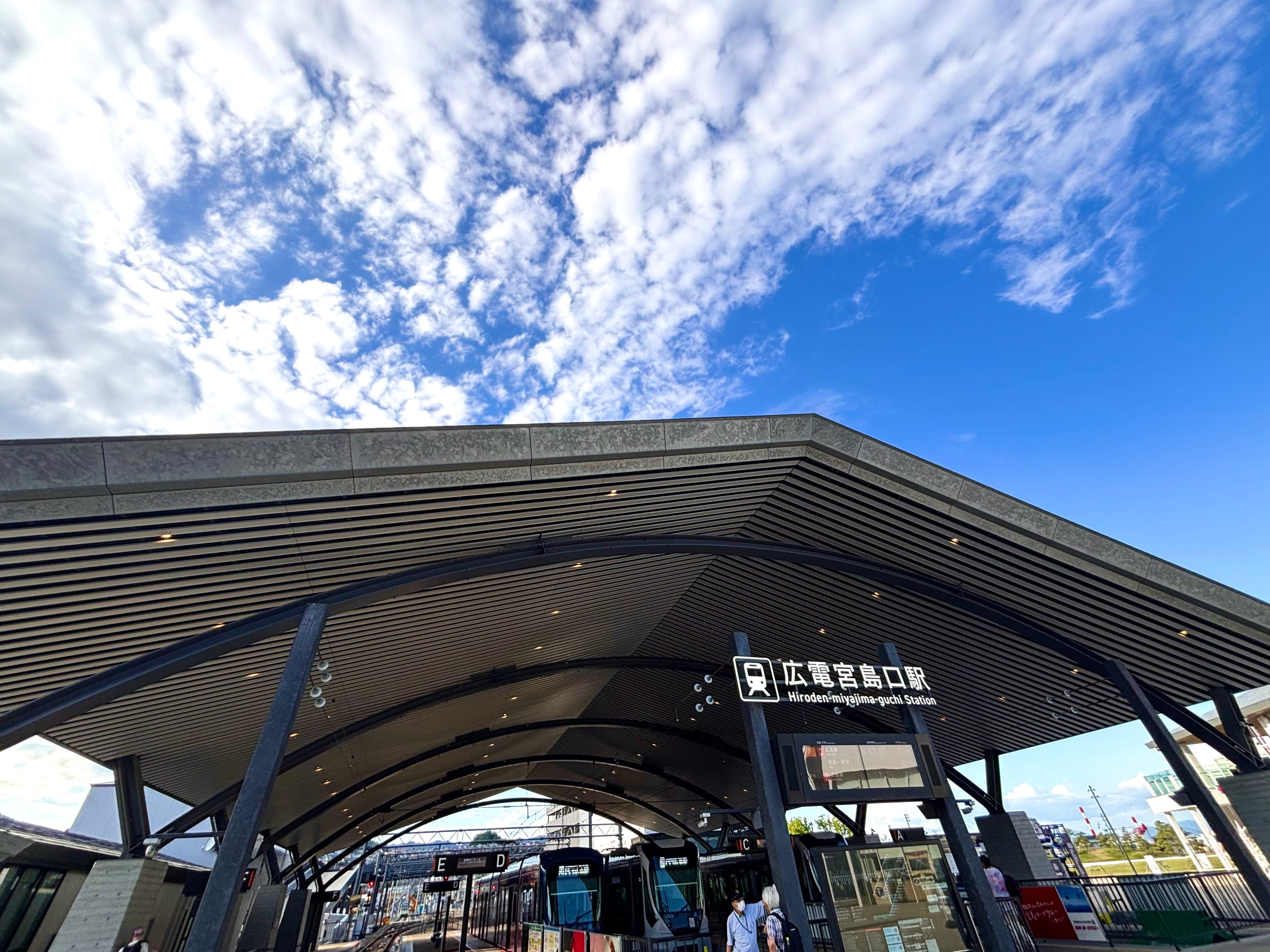
I felt something similar at Miyajima-guchi.
What once felt like a functional transfer point for the ferry now feels closer to a western entrance to Hiroshima. The space is more open, and the flow feels easier to follow. Visitors seem to move through it with less hesitation than before.
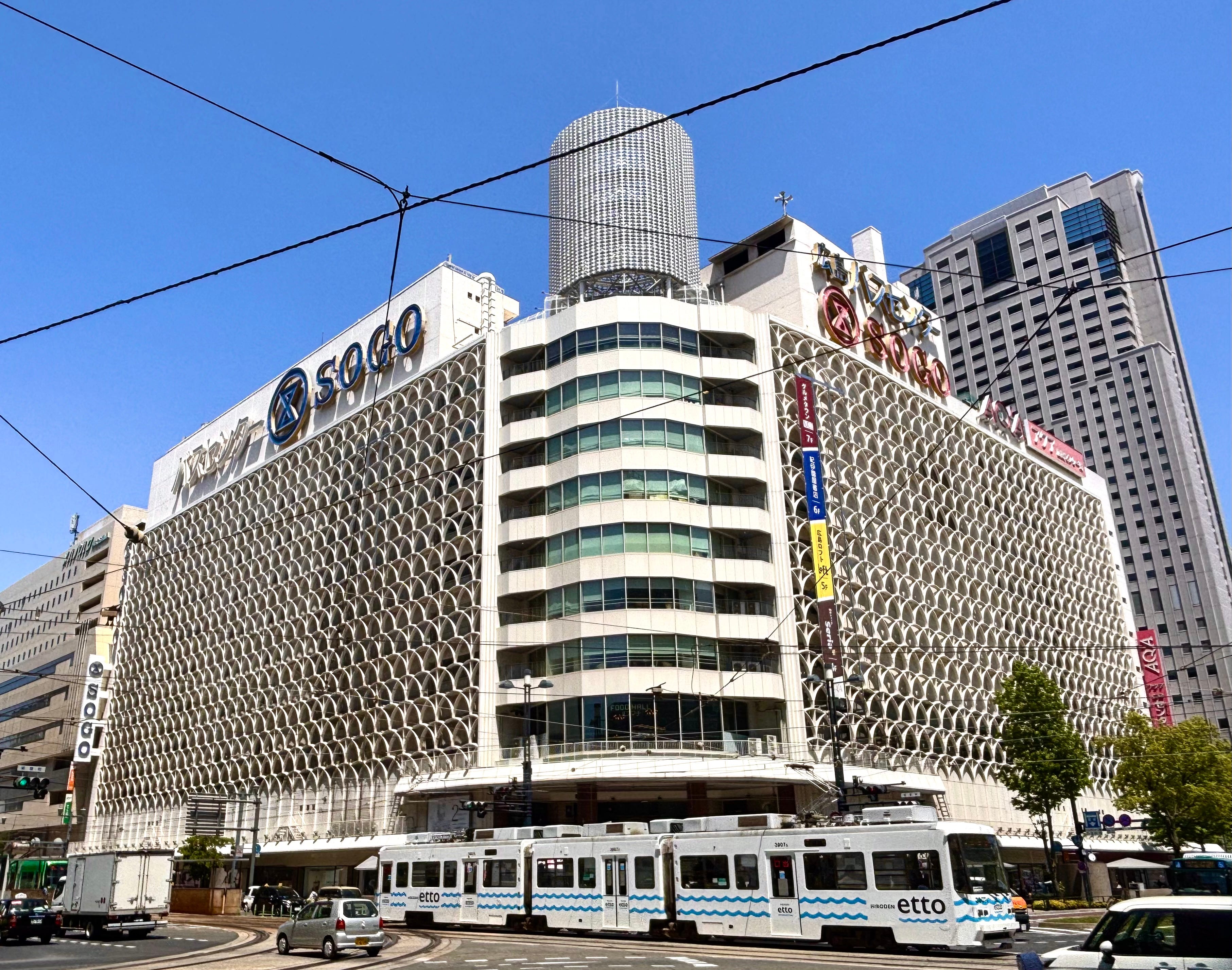
And quietly linking these changes together are Hiroshima’s streetcars.
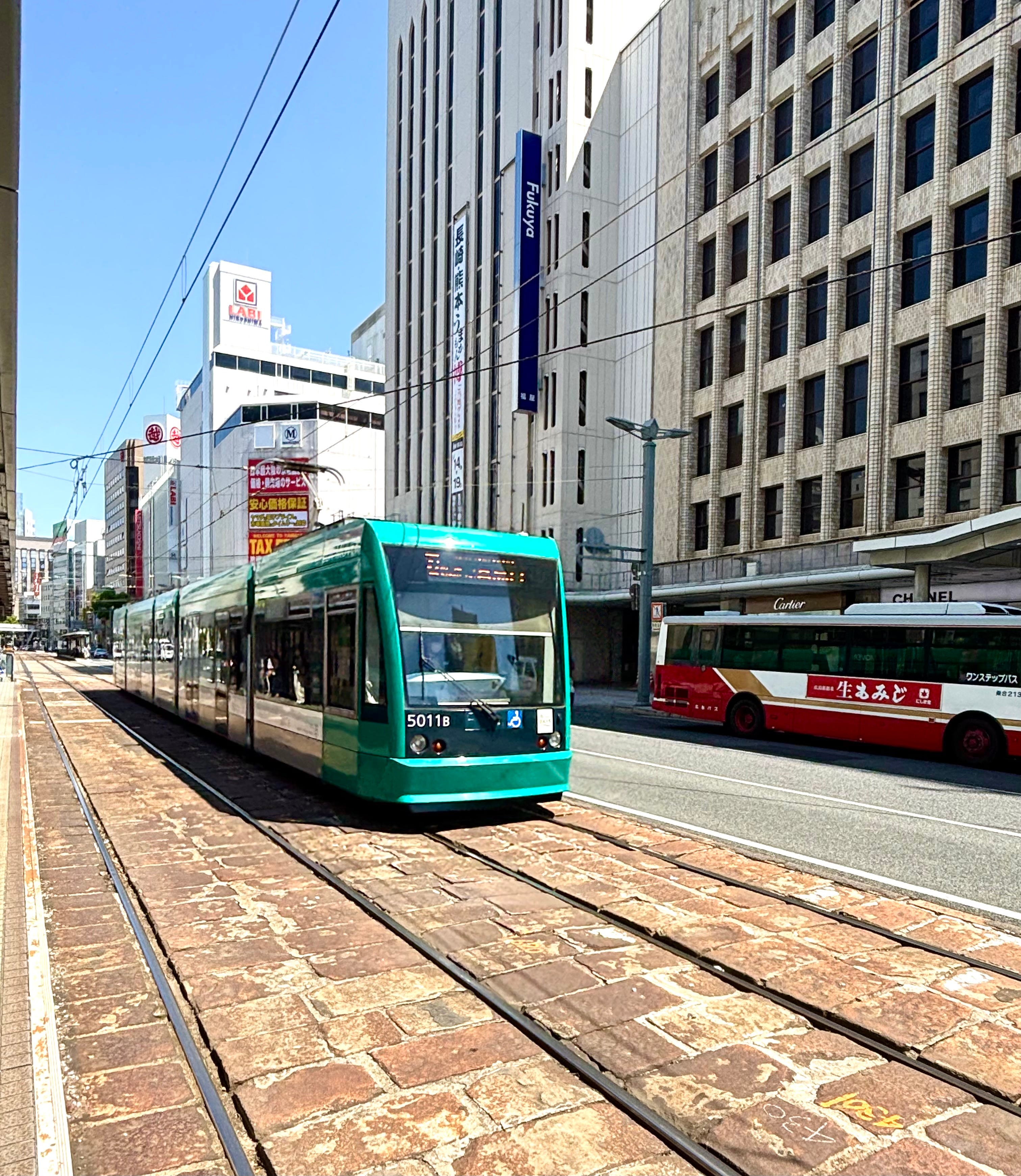
I have always found streetcars slightly different from other forms of urban transport. They do not follow the strict logic of efficiency that defines subways or high-speed rail. Instead, they move with the city rather than through it.
That atmosphere remains strong in Hiroshima.
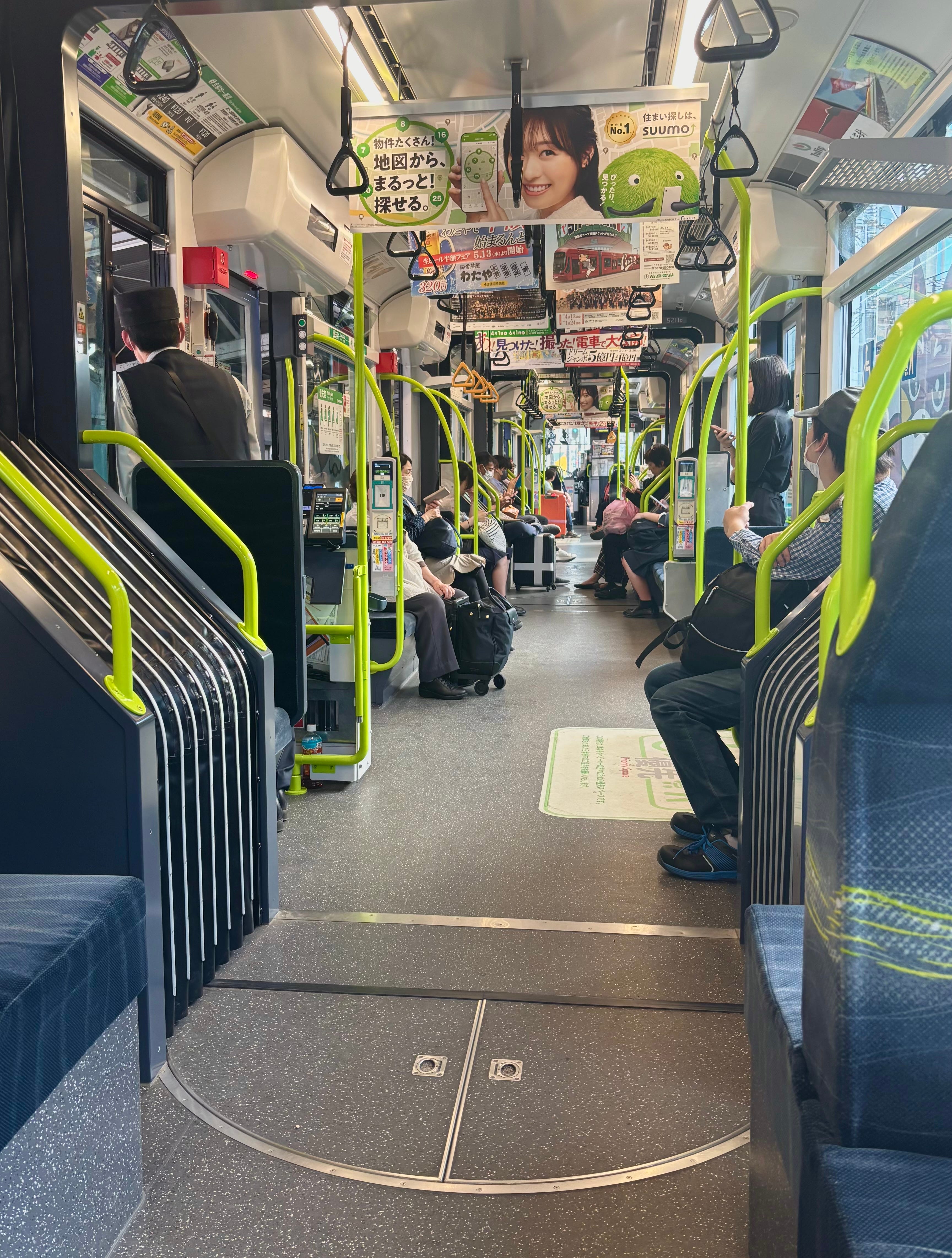
On the Miyajima Line, conductors still work alongside drivers, coordinating movement through gestures, eye contact, and small adjustments. It is a system that still carries a trace of human rhythm.
And somehow, that slightly analog quality fits Hiroshima remarkably well.
The streetcars are not just nostalgic infrastructure. They connect the station, shopping streets, Peace Memorial Park, and Miyajima, while quietly shaping the tempo of the city itself.
None of these changes are dramatic. But taken together, they suggest a city slowly reorganizing its own flow.
More Than a City of Memory
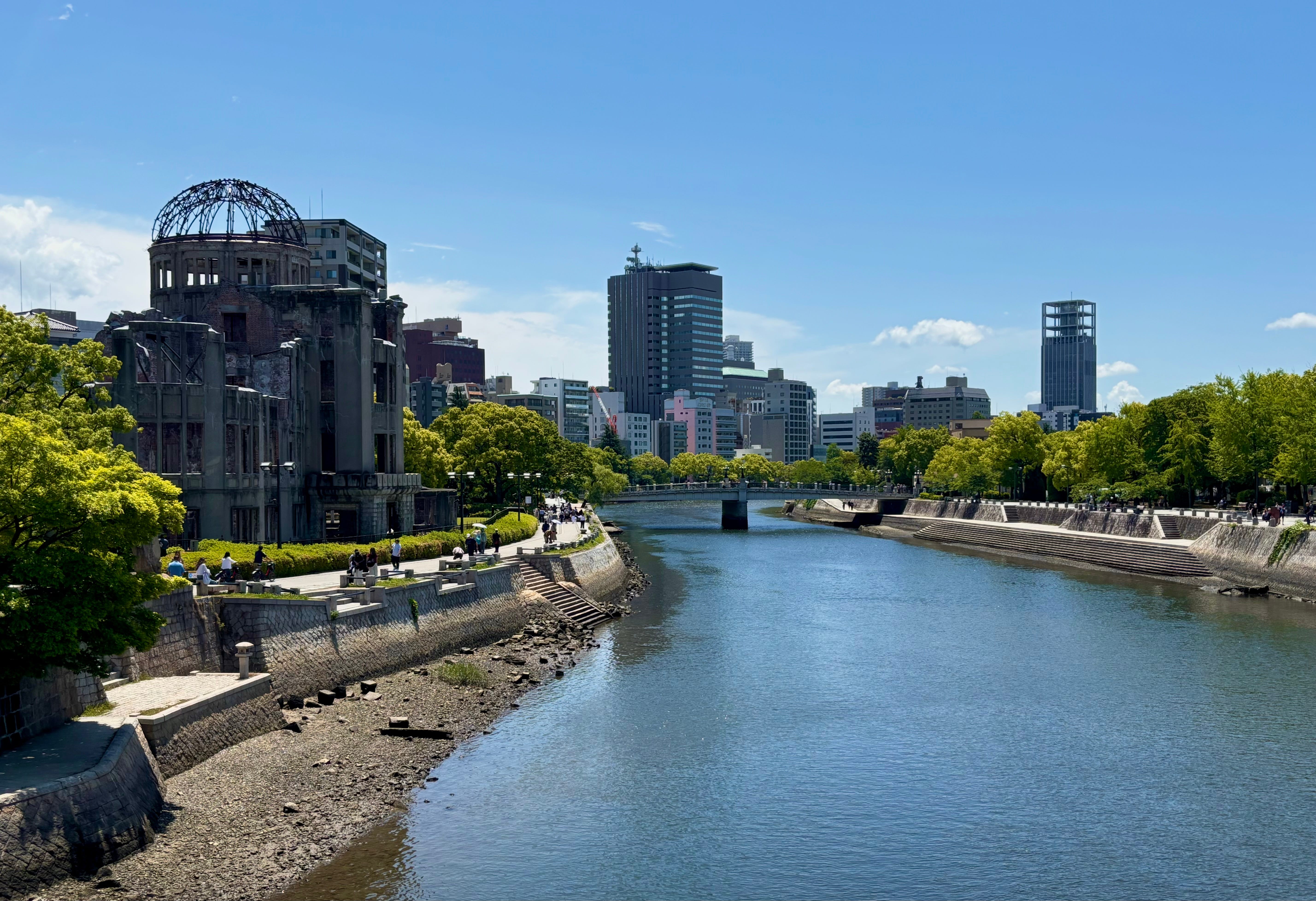
It is impossible to speak about Hiroshima without speaking about peace.
Walking through Peace Memorial Park, the weight of history remains unmistakable. But what struck me again this time was how naturally that space is woven into everyday life.
Visitors from overseas, school groups, local residents, runners, and people resting by the river all share the same space without tension. The park does not feel frozen in memory. It feels lived in.
For many visitors from Europe, North America, and Australia, Hiroshima still carries a strong connection to the history of the Second World War and the global conversation around nuclear weapons. In that sense, it occupies a different place in the imagination than most cities in Japan.
Recent tourism data also reflects this pattern. Compared with cities like Tokyo or Osaka, Hiroshima consistently receives a relatively higher proportion of visitors from Western countries, particularly the United States, Australia, and parts of Europe.
But this time, I felt something beyond that historical framing.
The station redevelopment, the changing approach to Miyajima, the growing ease of movement, and the everyday life unfolding beyond the memorial spaces all point to a city gradually adding new layers to its identity.
Hiroshima is still a city of peace.
But it is no longer only that.
Why So Many Western Visitors?
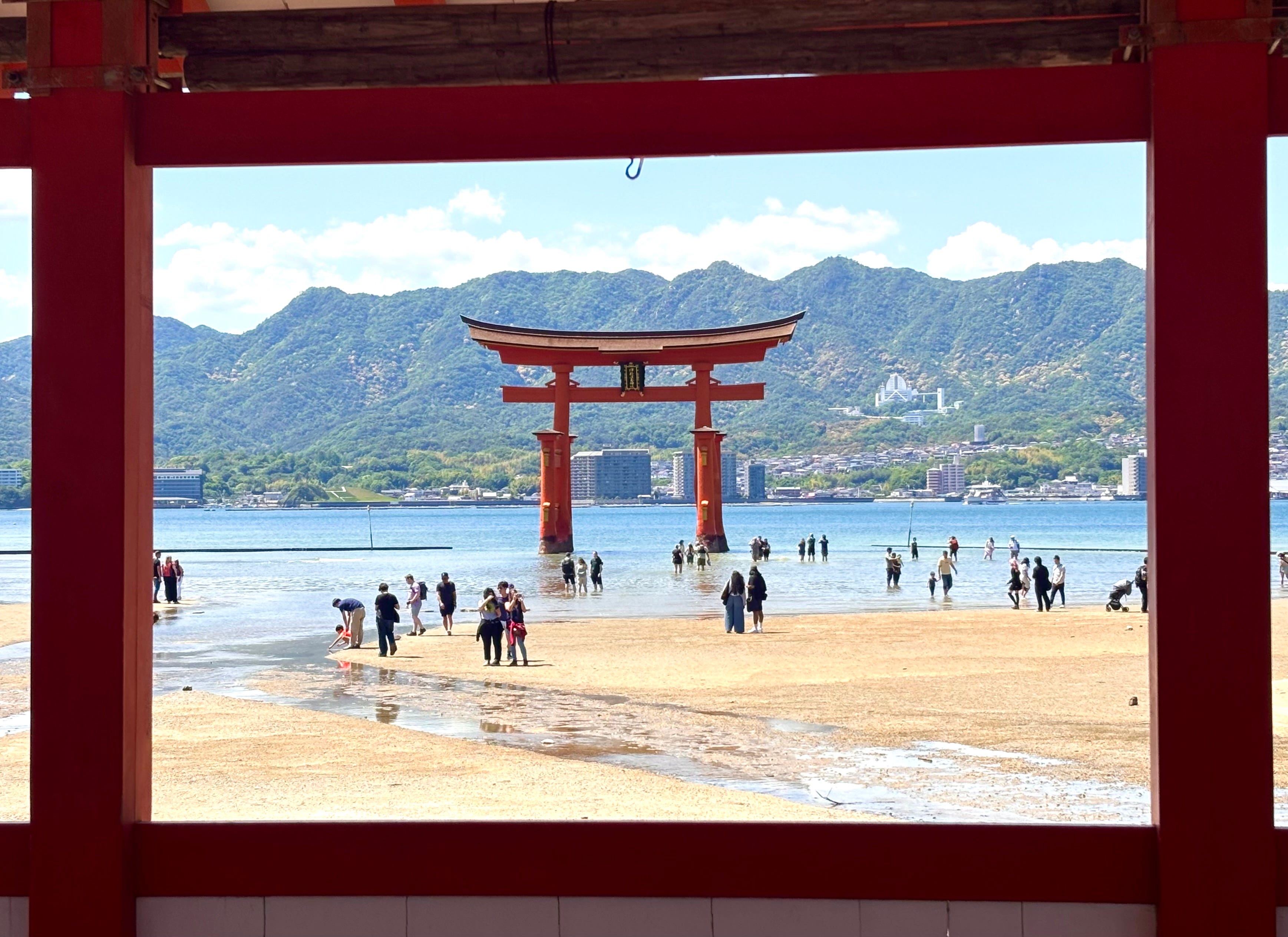
Walking through the city, I was struck by how often I heard English, French, and other European languages.
Visitors from across Asia were certainly present, but the overall balance felt different from Tokyo, Kyoto, or Osaka.
History is clearly one reason.
For many Western visitors, Hiroshima is not just another destination in Japan. It is tied to a broader historical narrative that extends beyond the country itself.
And then there is Miyajima.
For first-time visitors, Itsukushima Shrine remains one of Japan’s most recognizable landscapes. The combination of Peace Memorial Park and Miyajima gives Hiroshima a unique position: a place where history, memory, and scenery exist in close proximity.
At the same time, travel patterns also play a role. Visitors from nearby Asian countries often focus more heavily on Tokyo, Osaka, Kyoto, shopping, and shorter itineraries.
That balance may shift over time as travel routes continue to recover and expand. But for now, Hiroshima attracts a slightly different mix of visitors than many other major cities.
How Hiroshima Fits Into a Trip
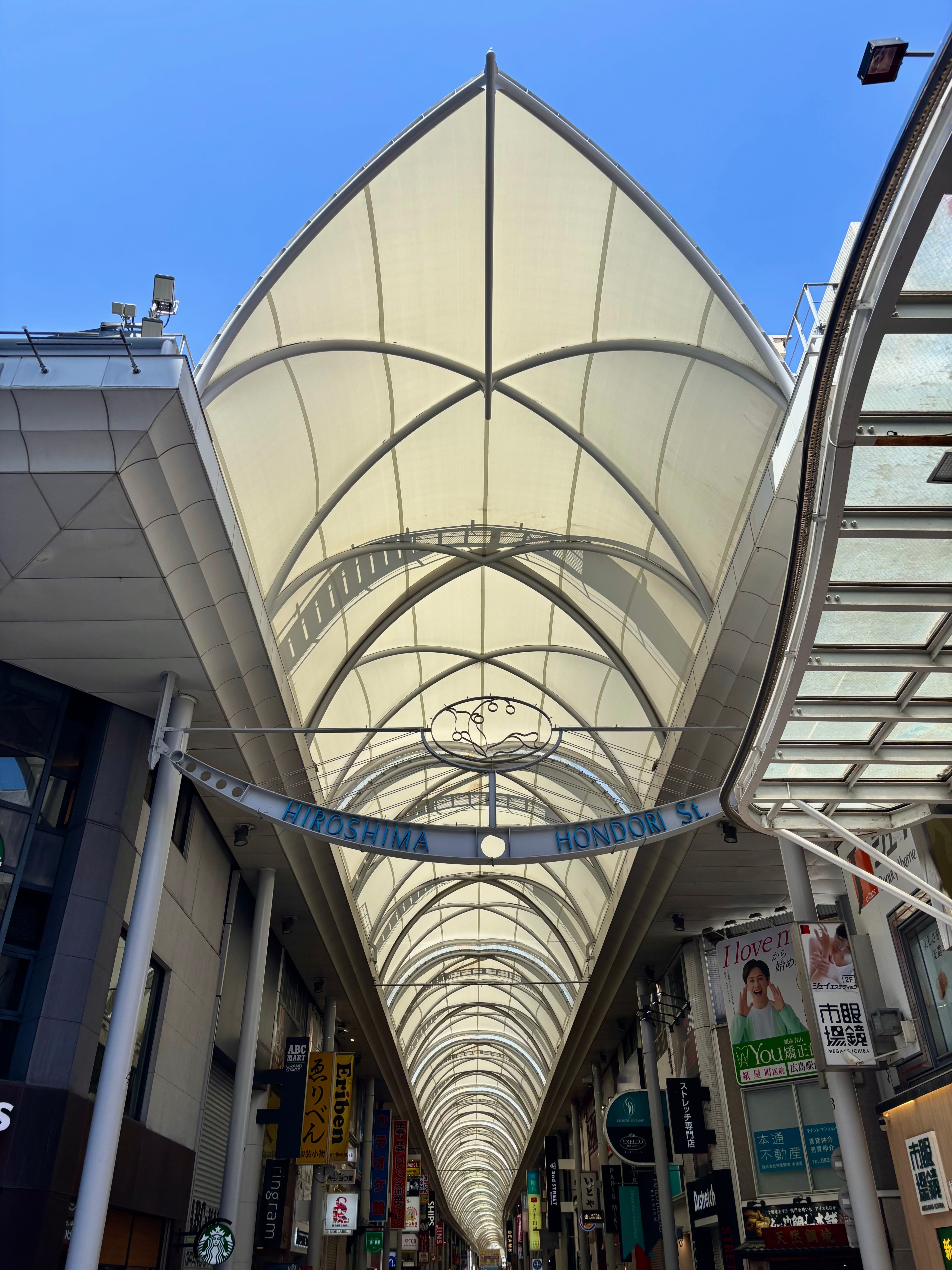
Hiroshima occupies an interesting position within a typical Japan itinerary.
It does not dominate in the way Tokyo, Kyoto, or Osaka do. Yet it contains two of the country’s most compelling destinations.
For many travelers, that makes Hiroshima a stop.
But it is worth more than that.
It is entirely possible to visit both Peace Memorial Park and Miyajima as a day trip. But staying overnight changes the experience.
The rhythm of the streetcars, the atmosphere around Hondori, the rivers running quietly through the city, and the ordinary life beyond the main sights begin to surface only with time.
The pace feels different here.
Perhaps it is the streetcars. Perhaps it is the geography of rivers and sea. Or perhaps it is something less easy to define.
Either way, Hiroshima does not push you forward in the way larger cities often do.
It allows you to stay a little longer.

A City Still Taking Shape
Hiroshima faces the same pressures as many regional cities in Japan: population change, economic balance, and the challenge of turning short visits into longer stays.
But what I saw was not a city in decline.
It was a city adjusting its shape.
Through its station, its streetcars, its gateways, and the way people now move through it, Hiroshima seems to be quietly redefining itself. The changes are subtle, but they are unmistakable. Hiroshima will always remain a city of peace. That foundation is permanent.
What is changing is what can be built on top of it.
More reasons to stay. More reasons to walk. More reasons to return.
For me, this visit was not just a return to a place I once knew.
It was a chance to see a familiar city still shaping itself—quietly, but with clear intent.
If you enjoy this kind of slower, more observational writing about Japan — beyond the usual travel checklist — please consider becoming a paid subscriber.
Your support helps me continue writing these kinds of posts — slowly, and from the ground.
The streetcar conductors coordinating with drivers by gesture is the
detail I keep returning to. I live in Tokyo on the twelfth floor and
take the Yurakuchō line every week, where the driver is alone behind
plexiglass and gestures have moved into the announcement system. Your
line "what is changing is what can be built on top of it" reads, to
me, as the opposite of the export-translation default that says Japan
changes by erasure. The conductors are still there. The foundation
is still there. The layer is added.
If you want to do more in Hiroshima consider going for a hike in the hills behind the station.
https://lessknownjapan.substack.com/p/hiroshima-ushitayama?r=7yrqz
You have shrines and torii, WW2 relics and views of a city that have inspired people since Mōri Terumoto climbed up one end and looked down to decide where to build Hiroshima Castle